The Complete Guide to Sunrise and Sunset Around the World

Sunrise and sunset can make one place feel steady and familiar, while another feels dramatic and always in motion. A morning in Singapore begins in a very different way from a morning in Oslo. An evening in Nairobi does not fade like an evening in Buenos Aires. Those changes are not random. They follow geography, season, and the shape of the planet itself. Once you understand that pattern, sunrise and sunset times stop feeling like simple numbers and start telling a story about where you are in the world.
Key takeaway
Sunrise and sunset times change from place to place because Earth is tilted, round, and always moving around the sun. Latitude, longitude, season, and time zone rules all shape the clock time you see. Near the equator, daylight stays fairly steady. Closer to the poles, daylight can stretch or shrink in dramatic ways. A reliable location tool helps you find exact daily times for continents, countries, cities, and regions with much less guesswork.
Sunlight Is Global, But It Never Arrives the Same Way Twice
The sun rises every day, yet it does not greet the planet in one neat pattern. A city near the equator often sees sunrise and sunset times that change only a little across the year. A city far to the north or south can swing from very short winter days to long summer evenings. That contrast is one reason people search for solar times before travel, before outdoor plans, and before seasonal work.
Think about how different these daily rhythms can feel. In Quito, daylight stays close to balanced for much of the year. In Reykjavik, winter mornings can be slow and dark, while summer nights can feel almost endless. In Cape Town, June brings a cool season with shorter days, while December stretches daylight further into the evening. The same sun, the same planet, but a very different daily experience.
This is also why a site built around location matters. People do not only want a general answer. They want today’s answer for the place they care about. A parent planning a school run, a hiker choosing a trail start, a photographer waiting for warm evening light, each person needs the exact local timing, not a rough idea.
“Sunrise and sunset are daily events, yet they are also local events. The numbers only make sense when they are tied to one place on the map.”
Why Location Changes Everything
Four big factors shape sunrise and sunset times. They work together every day, even if most people never think about them while checking the clock.
- Latitude
Latitude is how far north or south a place sits from the equator. This is one of the biggest reasons daylight behaves differently around the world. Places near the equator tend to have steadier sunrise and sunset patterns. Places at higher latitudes often experience larger seasonal changes. - Longitude
Longitude affects where a place sits east or west. Since Earth rotates from west to east, places farther east usually experience sunrise earlier than places farther west, even within the same country or time zone. - Earth’s tilt
Earth is tilted on its axis. That tilt changes the angle and duration of sunlight across the year. It is the heart of the seasonal story. Without that tilt, daylight patterns would be much more uniform. - Time zone rules
Clock time is a human system. Solar time is a natural one. These two do not always line up neatly. That gap helps explain why the sun may rise surprisingly late or early on the clock in some places.
Once you know these pieces, odd looking sunrise and sunset times become easier to understand. They are not errors. They are the result of where a place sits and how people have chosen to organize time.
From Continents To Neighborhoods, The Pattern Keeps Changing
Broad geography gives the first clue. A continent can suggest the daylight rhythm, but each smaller layer, country, city, or region, adds more detail. Europe contains places with huge seasonal contrasts between north and south. Africa includes equatorial areas with relatively stable daylight and southern locations with more noticeable seasonal shifts. North America stretches far enough to include tropical, temperate, and subarctic patterns all at once.
That is why many people begin with sunrise and sunset by continent. It gives a large scale view before you narrow down to the place you actually need. A traveler planning a multi country trip may begin at that broad level. A student comparing daylight patterns across the world may do the same.
After that, the search often becomes more specific. National size matters. Large countries can show major differences from one side to the other. Russia, Canada, Australia, the United States, Brazil, and China each cover wide areas, which means sunrise and sunset can vary a lot inside one national border. Looking at sunrise and sunset in countries helps show how national boundaries do not erase geographic variation.
Then comes the local layer, where daily use becomes most practical. Sunrise in one city can differ from sunrise in another city a few hundred kilometers away. That is why people often move directly to sunrise and sunset times in cities when they need today’s exact answer for home, work, or travel.
Regions add one more helpful level. Some people think in terms of provinces, states, territories, or wider local areas rather than city names. Looking up sunrise and sunset by region can make it easier to find the right page when the city is small, nearby places are grouped together, or a regional view is more useful than a city view.
How Sunrise And Sunset Behave Across Major World Zones
The world can be roughly understood through a few daylight bands. These are not strict borders, yet they help explain what people usually experience.
- Equatorial zone, daylight length stays relatively steady, sunrise and sunset move a little across the year, and days often feel balanced.
- Tropical and subtropical zone, daylight still changes moderately, but the shift is more noticeable than at the equator.
- Temperate zone, seasons become much more visible, summer days grow longer, winter days get shorter, and sunrise and sunset move by larger amounts.
- Polar and near polar zone, extremes dominate, with very short winter daylight, very long summer daylight, and in some places periods where the sun barely sets or barely rises.
This broad picture helps explain why two people can talk about sunset and mean very different things. One person may think of a steady early evening. Another may think of a summer sunset that arrives close to midnight. Both are normal in their own setting.
Africa
Many parts of Africa sit closer to the equator than Europe or North America. That means sunrise and sunset tend to stay more consistent across the year in many areas. Cities such as Nairobi and Kampala do not see the dramatic seasonal daylight swings that happen farther north or south. Southern African cities, including Cape Town, do show stronger seasonal movement, though still with a different pattern from northern Europe.
Europe
Europe is one of the clearest examples of latitude at work. Madrid, Rome, Berlin, Stockholm, and Tromsø can feel like different daylight worlds. Southern Europe has noticeable seasons, yet the shift becomes much stronger as you go north. Long summer evenings and dark winter mornings shape routines, moods, tourism, and outdoor life.
Asia
Asia covers huge north south and east west distances. That makes it rich in daylight variety. Singapore remains fairly steady across the year. Tokyo shifts more with the seasons. Delhi has a strong summer and winter difference in day length, while high latitude parts of Russia experience much larger extremes. The scale of Asia makes local lookup especially helpful.
North America
North America contains tropical, desert, temperate, mountain, and subarctic daylight patterns. Miami, Mexico City, Vancouver, Anchorage, and Nuuk do not share the same rhythm. Even within the United States and Canada, sunrise and sunset can feel very different from one region to another.
South America
South America crosses the equator and reaches deep into the southern hemisphere. Cities near the equator stay fairly steady. Farther south, places such as Buenos Aires and Santiago show stronger seasonal daylight shifts. Since seasons are opposite to those in the northern hemisphere, December and June often surprise first time visitors.
Oceania
Oceania includes equatorial islands, tropical zones, and southern cities with clear seasonal change. Sydney, Melbourne, Auckland, and Wellington all show meaningful daylight swings across the year, while many Pacific islands remain more stable.
Why Latitude Has Such A Strong Grip On Daylight
Latitude deserves extra attention because it explains so much. The farther a place is from the equator, the more strongly Earth’s tilt affects the angle of incoming sunlight across the year. That change alters both day length and the time of sunrise and sunset.
Near the equator, the daily sunlight pattern feels steady because the sun’s path changes less dramatically with the seasons. A person living there may notice sunrise or sunset shifting by minutes, not by the huge swings seen farther north or south.
At higher latitudes, that same tilt produces stronger contrasts. The summer sun takes a longer arc across the sky, which leads to earlier sunrise and later sunset. In winter, the opposite happens. The sun’s path shortens, sunrise comes later, and sunset comes earlier.
That is why “how far north or south am I?” is often the fastest way to explain daylight expectations in a new place.
“Latitude sets the stage. Season changes the lighting.”
Longitude, Local Position, And The Clock On Your Wall
Longitude is quieter than latitude in everyday conversation, yet it matters a lot. Earth rotates, which means eastern places meet the sun earlier than western places. Two cities at similar latitudes can still have different sunrise times if one sits much farther east.
This becomes especially interesting inside wide countries. A nation may use one official time zone across a broad area, or several time zones across its width. In either case, sunrise and sunset can feel earlier or later on the clock depending on where the location sits within its time zone.
Western edges of a time zone often see later sunrises and sunsets by the clock. Eastern edges often see earlier ones. That is not a mistake. It is the result of using one standard clock time across a wide slice of land.
For daily life, this means that “same country” does not always mean “same sunrise experience.” People planning early departures, outdoor work, school routines, or evening events often notice this difference quickly.
Why The Seasons Shift Solar Times So Much
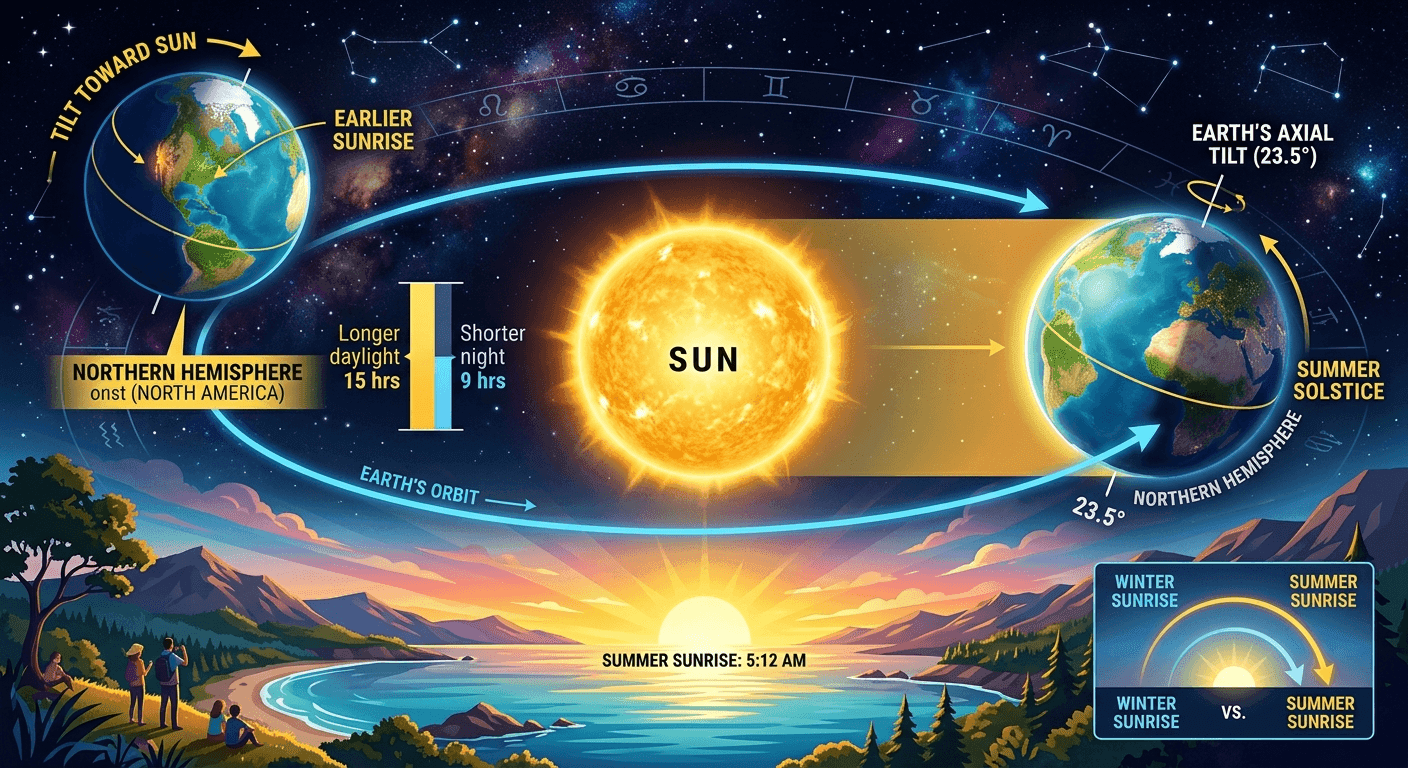
Seasonal change is the most obvious reason sunrise and sunset are not fixed. Earth moves around the sun while tilted on its axis. That means each hemisphere leans toward the sun for part of the year and away from it for another part.
In the northern hemisphere, around June, places receive a longer share of daylight. Sunrise tends to come earlier and sunset later. Around December, the reverse happens. In the southern hemisphere, the pattern flips. December brings longer days there, while June brings shorter ones.
This seasonal movement shapes more than just beauty in the sky. It changes commuting light, school mornings, farming schedules, sports practice times, and how long parks and public spaces stay useful after work. A person who tracks daylight across months starts to notice how daily routine bends around the sun.
Seasonal Contrast At The Equator
Equatorial locations usually do not feel a dramatic rise and fall in day length. Sunrise and sunset remain relatively consistent. There can still be small changes, but the broad pattern is balance.
Seasonal Contrast In Temperate Places
Temperate locations experience the classic four season daylight story. Summer stretches the day. Winter compresses it. Spring and autumn sit in between, often changing quite quickly from week to week.
Seasonal Contrast Near The Poles
Near polar regions, seasonal contrast becomes intense. Some places experience periods of midnight sun in summer or polar night in winter. These are among the most dramatic examples of Earth’s tilt in action.
Time Zones, Solar Noon, And Why Noon Is Not Always Midday Light
Many people assume the sun should be highest at 12:00 noon. Real life does not always work that way. Solar noon is the moment when the sun reaches its highest point in the sky for a location. Clock noon is simply a mark on a human made time system. The two often differ.
There are several reasons for this:
- Time zones cover broad areas, not a single line of longitude.
- Some countries use one time zone across very wide territory.
- Some regions follow daylight saving time, which shifts clock time relative to sun time.
- Political and practical choices can shape time zone boundaries in ways that do not match pure geography.
This is why the clock can say noon while the sun is still climbing, or already beginning to descend. It also explains why sunset can feel “late” in some western parts of a time zone and “early” in eastern parts.
For people who care about daylight rather than only the clock, a location based sunrise and sunset tool is more useful than general assumptions. It tells you what is happening in your place today, under your time rules.
How To Look Up Sunrise And Sunset Times For Any Place
Finding a solar time should be easy, but accuracy depends on choosing the right location. A practical search process usually works best in a few simple steps.
- Start with the widest area you know
If you are planning a trip across several regions or comparing parts of the world, broad browsing helps first. Some users begin with sunrise around the world to get a wide view of morning patterns before narrowing down. - Narrow to the country or region
This helps when many cities share a name or when the place is part of a larger local area. - Choose the exact city or location page
This is the key step for daily accuracy. Solar times are local. - Check the local time zone shown on the page
A correct city match is valuable because clock time matters as much as solar position when you are planning real activities. - Use the date you care about
Today’s times are great for immediate plans. Future dates can matter for travel, shoots, events, seasonal research, or outdoor work.
Many users also want the evening side of the story, which is why sunset around the world is useful in its own right. Sunset timing affects dinner plans, scenic viewpoints, prayer schedules in some traditions, return time for hikers, and the soft light window prized by photographers.
A strong location tool makes this process smooth because it does more than show a number. It ties the result to place, local time, and daily context.
What Makes A Reliable Sunrise And Sunset Tool Useful
Accuracy is the first requirement, but it is not the only one. People also need clarity and structure. A well organized solar time site becomes more useful when it lets visitors move naturally from broad areas to specific places.
Useful features often include:
- Daily updated times for many locations
- Easy browsing by continent, country, city, and region
- Visible local time and time zone information
- Pages that help users compare locations without confusion
- A clean path from broad browsing to exact local lookup
That structure matters because real world users do not all begin in the same way. One person knows the city already. Another only knows the country. Another is comparing multiple destinations before booking a trip. A site that supports all of those paths becomes useful for both casual readers and people who rely on daylight details regularly.
Daily Light Across Different Kinds Of Places
A simple comparison helps show how varied sunrise and sunset can be. The exact times change with date, but the pattern remains useful.
| Type of place | Typical daylight pattern | What people usually notice |
| Equatorial city | Fairly stable through the year | Sunrise and sunset stay close to a familiar routine |
| Tropical city | Moderate change across seasons | Some shift in day length, but not extreme |
| Temperate city | Clear summer and winter contrast | Long evenings in summer, short afternoons in winter |
| High latitude city | Large seasonal swings | Very early summer sunrise, very late winter sunrise |
| Near polar location | Extreme daylight changes | Possible midnight sun or prolonged winter darkness |
The table gives a broad pattern, yet the exact local answer still depends on date and position. That is why daily lookup remains important even after you understand the general rules.
Who Actually Benefits From Knowing These Times
Sunrise and sunset information is useful for far more people than many assume. It can be practical, creative, personal, and seasonal all at once.
Travelers use it to plan arrival days, scenic viewpoints, road departures, and evening walks in unfamiliar places.
Photographers care about morning and evening light quality, shadow length, and how much time they have before the light changes.
Hikers and outdoor planners use it for start times, safe return windows, and pacing long routes.
Farmers and growers watch daylight as part of a larger rhythm of fieldwork, care routines, and seasonal planning.
Runners and cyclists use it to fit exercise into the light they have before work or after sunset.
Families notice it through school mornings, bedtime routines, park visits, and weekend outings.
People tracking mood and seasonal change often pay close attention to how light shifts through the year, especially in places with very short winter days.
“Knowing sunrise and sunset is not only about the sky. It is also about timing your day with more confidence.”
Travel Planning Gets Better When You Know The Light
Travel often exposes people to daylight patterns they did not expect. A visitor from Indonesia may be surprised by how late summer sunset arrives in northern Europe. A traveler from Sweden may feel the opposite when visiting an equatorial city where evening falls quickly and consistently.
This matters because light changes how a place feels. Landmarks look different in morning light. Public spaces feel busier or quieter depending on daylight. Long evening light can stretch a day in a pleasant way. Early darkness can change transport, safety choices, and sightseeing plans.
Before a trip, checking sunrise and sunset times helps with:
- Flight arrival expectations
- Road trip departure planning
- Golden hour photography timing
- National park visits
- Beach and waterfront evenings
- Cold season city breaks where daylight is limited
It also helps manage expectations. A winter trip to a high latitude city may offer beauty, but not many daylight hours. A tropical trip may offer early sunrise and fairly steady sunset timing nearly every day.
Photographers Read The Day Differently
For photographers, sunrise and sunset are not just endpoints of daylight. They define mood, angle, texture, and color in a scene. The hour around sunrise often brings soft shadows and calm streets. The time before sunset can create warm tones and strong depth in landscapes or city scenes.
Yet timing is everything. Arriving twenty minutes late can mean missing the light completely. That is why exact local solar times matter. They allow a photographer to plan setup, travel time, and location choice with more confidence.
This is true for:
- Landscape photography
- City skyline work
- Wedding shoots
- Travel photography
- Wildlife observation
- Seasonal projects that compare the same place across the year
In many cases, sunrise and sunset pages become part of a photographer’s daily routine, just like checking weather and route conditions.
Outdoor Safety Often Starts With A Realistic Sunset Time
People sometimes treat sunset as a decorative detail. Outdoors, it can be a safety detail. Hikers, campers, paddlers, and cyclists often need to know not only when the sun sets, but how much usable light remains after that moment. Planning backward from sunset is often the smart choice.
A few habits help:
- Check the exact sunset time for the location, not just the nearest major city.
- Add a buffer for walking, packing, or changing trail conditions.
- Pay more attention in winter, because daylight shrinks faster than many people expect.
- Do not assume yesterday’s timing matches next month’s timing.
Even in familiar places, seasonal drift can catch people off guard. Days do not stay still.
How Different Countries Handle Clock Time
Time zones are not purely geographic. They are also political and practical. Some countries span many longitudes and use several time zones. Others choose fewer time zones than geography alone might suggest. Some observe daylight saving time. Others do not. Some have offsets that are not full hours.
All of this shapes the clock time attached to sunrise and sunset. It explains why two locations with similar solar position may show different local clock times. It also explains why travelers often feel a mismatch between “how the light feels” and “what the clock says.”
Looking at local time zones alongside solar times solves much of that confusion. It connects the natural event to the time system people live by every day.
Seasonal Life Near The Equator Versus Near The Poles
One of the clearest ways to understand global sunrise and sunset is to compare life near the equator with life near the poles.
Near the equator, daylight is a reliable companion. Sunrise and sunset stay close to a stable rhythm. People may not spend much time talking about changing day length because the shift is modest.
Near the poles, light becomes a major seasonal force. It changes routines, social habits, tourism, energy use, and emotional experience. Winter darkness can dominate daily life. Summer light can stretch activity much later into the evening.
Neither pattern is more “normal” than the other. They are simply different responses to place on Earth. That perspective helps explain why a global sunrise and sunset directory is more than a utility. It is also a quiet map of how people live under different skies.
Common Questions People Have About Sunrise And Sunset
Why are sunrise and sunset not the same every day?
Because Earth is tilted and moving around the sun. That changes day length and the sun’s path across the sky through the year.
Why do nearby places sometimes have different times?
Small differences in longitude, latitude, elevation, and official time rules can all play a role. Even nearby places may not match exactly.
Why does sunset feel so late in some countries?
Often because the location sits far west within its time zone, because daylight saving time is in effect, or because summer day length is very long at that latitude.
Why is the change small in some places and huge in others?
Latitude is the main reason. Places near the equator stay steadier. Places farther north or south experience bigger seasonal shifts.
Can one country have very different sunrise times within it?
Yes. Large countries often show major differences across their width and height on the map.
Making Sense Of The World Through Daily Light
Sunrise and sunset are among the simplest things to notice and one of the richest things to understand. They connect astronomy, geography, season, travel, routine, and local identity in a single daily event. A city’s morning light tells you where it sits. A country’s changing winter afternoons tell you about latitude. A late summer sunset can reveal as much about geography as any map.
That is why checking local solar times is never only about numbers. It is about context. It is about knowing how the day will unfold where you are, or where you are about to go. It helps people plan, compare, create, and pay attention.
With a structured tool that organizes places by continent, country, city, and region, it becomes much easier to move from curiosity to a clear local answer. The result is simple on the surface, sunrise at one time, sunset at another, but behind it sits the full shape and motion of the planet.
Once you start noticing those patterns, each page of local sunrise and sunset data feels less like a lookup box and more like a window into how that part of the world lives with light.
More Sun Related Articles:
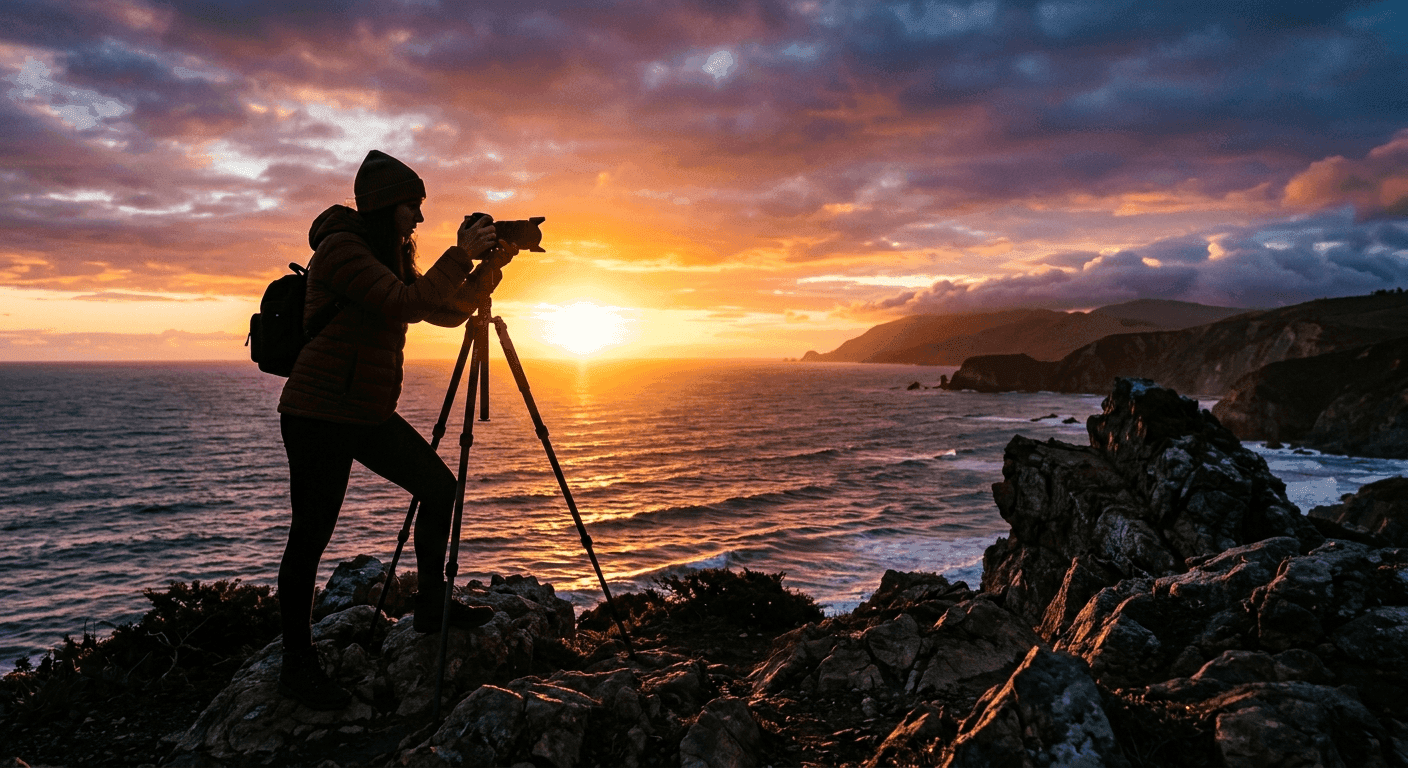
How to Master the Best Camera Settings for Dramatic Sunrise Silhouettes
The breeze is still cool, the birds are only beginning to chatter, and a ribbon of fire climbs over the horizon. This tiny window of daylight is pe...
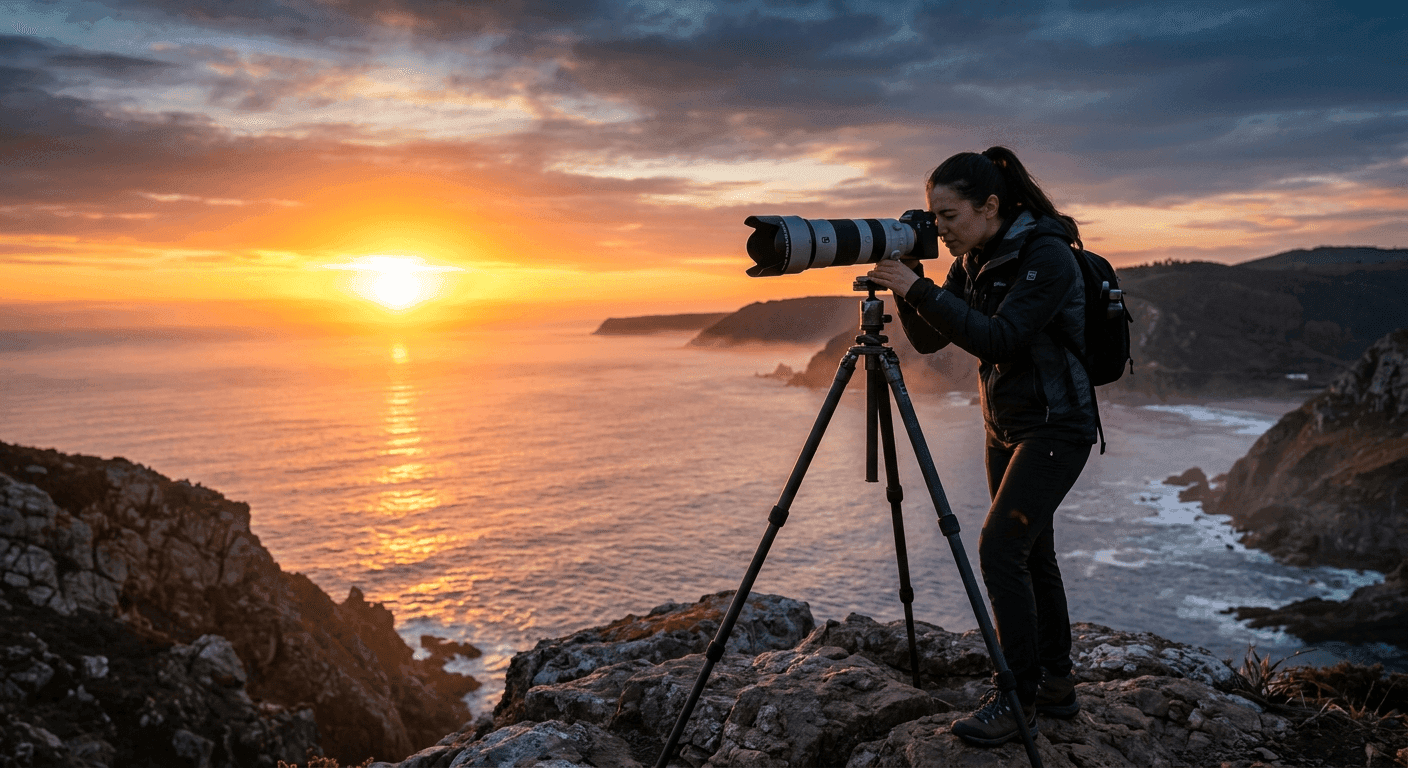
How to Plan a Successful Sunrise Photoshoot in Low Light Conditions
The sky glows. Colors shift by the second. You have only a short window to grab that perfect shot. Sunrise photography is thrilling, yet it demands...
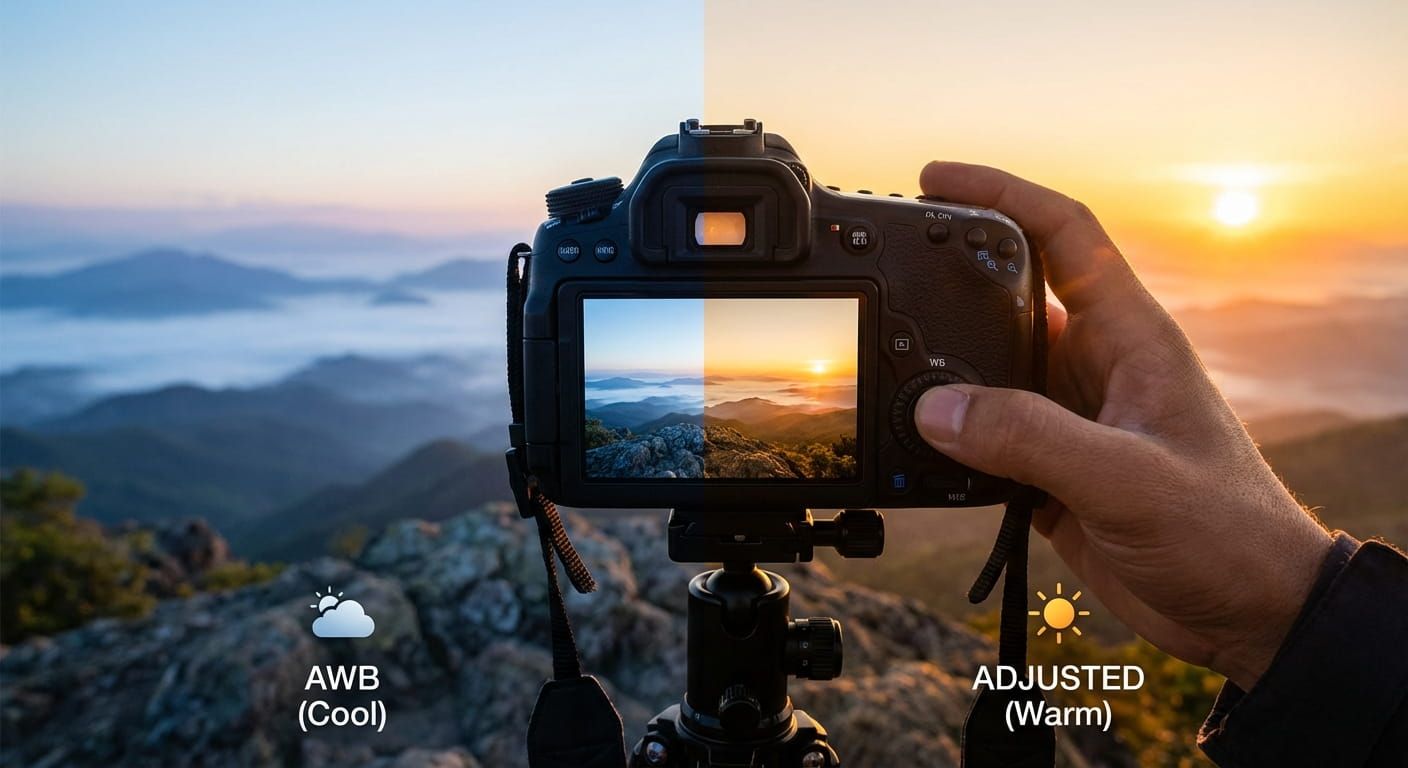
Why You Should Adjust Your Photography White Balance During Sunrise and Sunset
The sky blushes, shadows stretch, and your sensor scrambles to decide what “white” really looks like. That is the moment white balance choices turn...
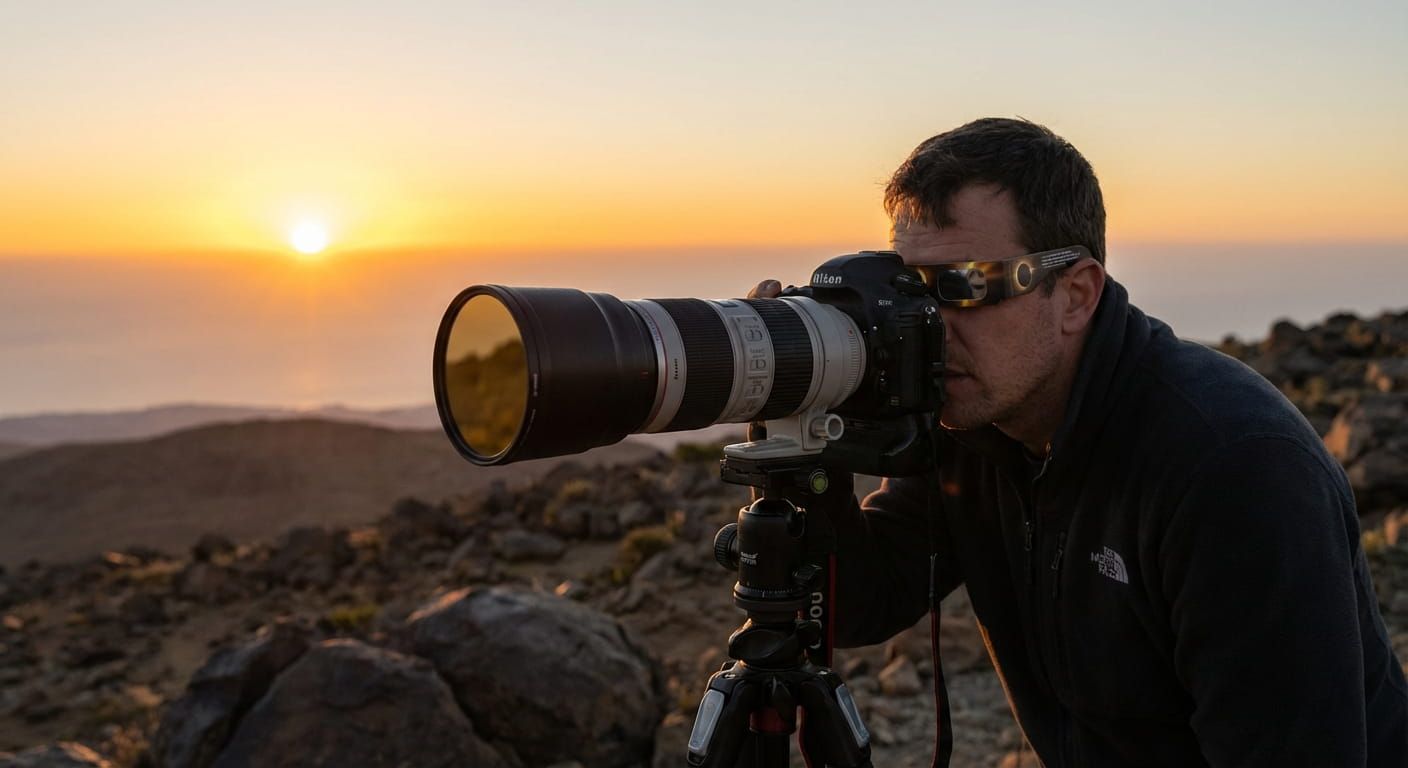
How to Safely Photograph The Sun During the First Few Minutes of Sunrise
The very first sliver of sun above the horizon looks gentle, yet its rays are already powerful enough to damage a sensor or, worse, your eyes. With...

The Best Techniques for Painting the Subtle Color Gradients of a Sunrise
Sunrise lasts only moments, yet the shifting ribbons of gold, rose, and pale blue linger in memory. Capturing that fleeting glow with paint can fee...
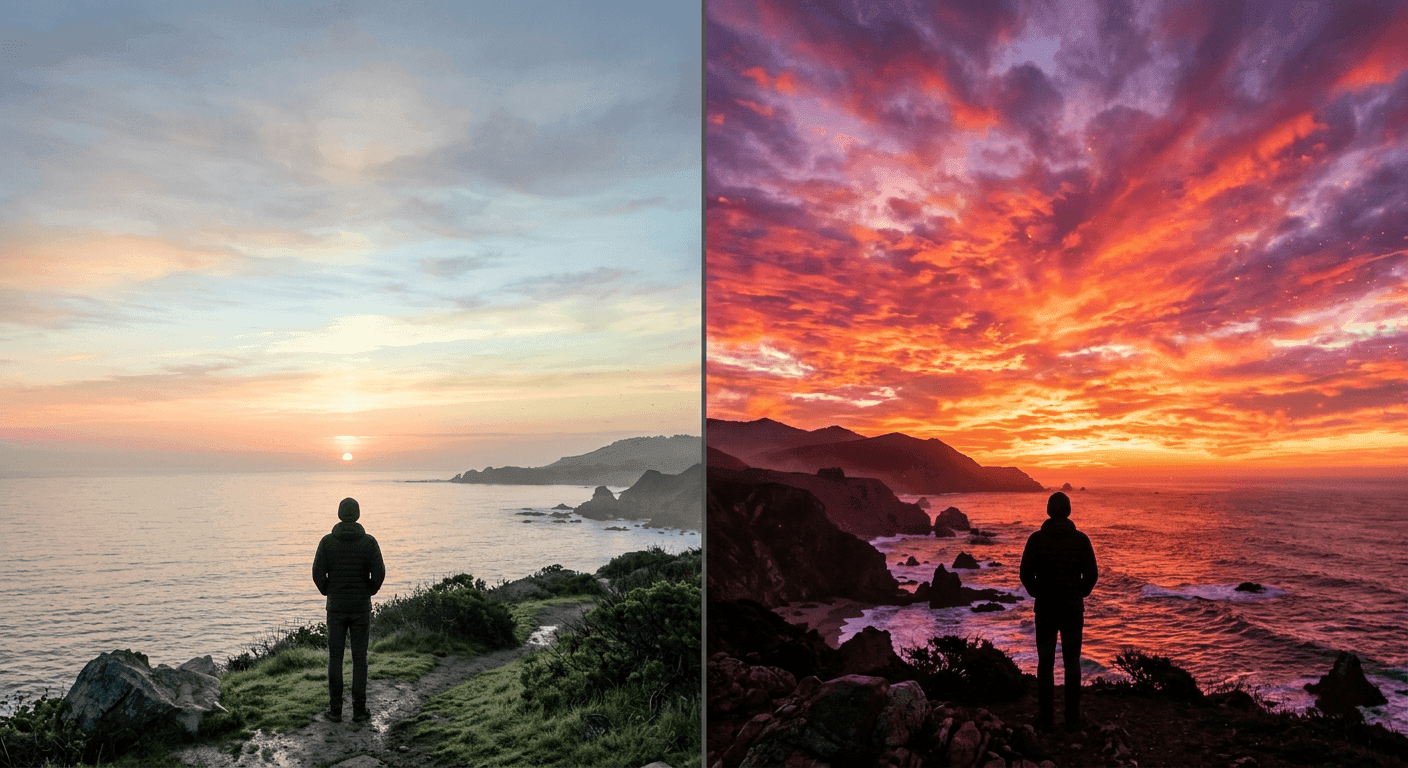
The scientific reasons why sunrises often appear less vibrant than sunsets
Sunset photos flood social feeds with neon pinks and blazing oranges. Dawn, in comparison, often greets us with shy pastels. If you have ever asked...

Why atmospheric dust creates different color palettes at sunrise versus sunset
First light creeps over the horizon, soft coral pink sneaks into the sky and the world feels hushed. Twel...

The unique chemistry behind the deep blues and purples of a pre-sunrise sky
Twilight Snapshot <p style...
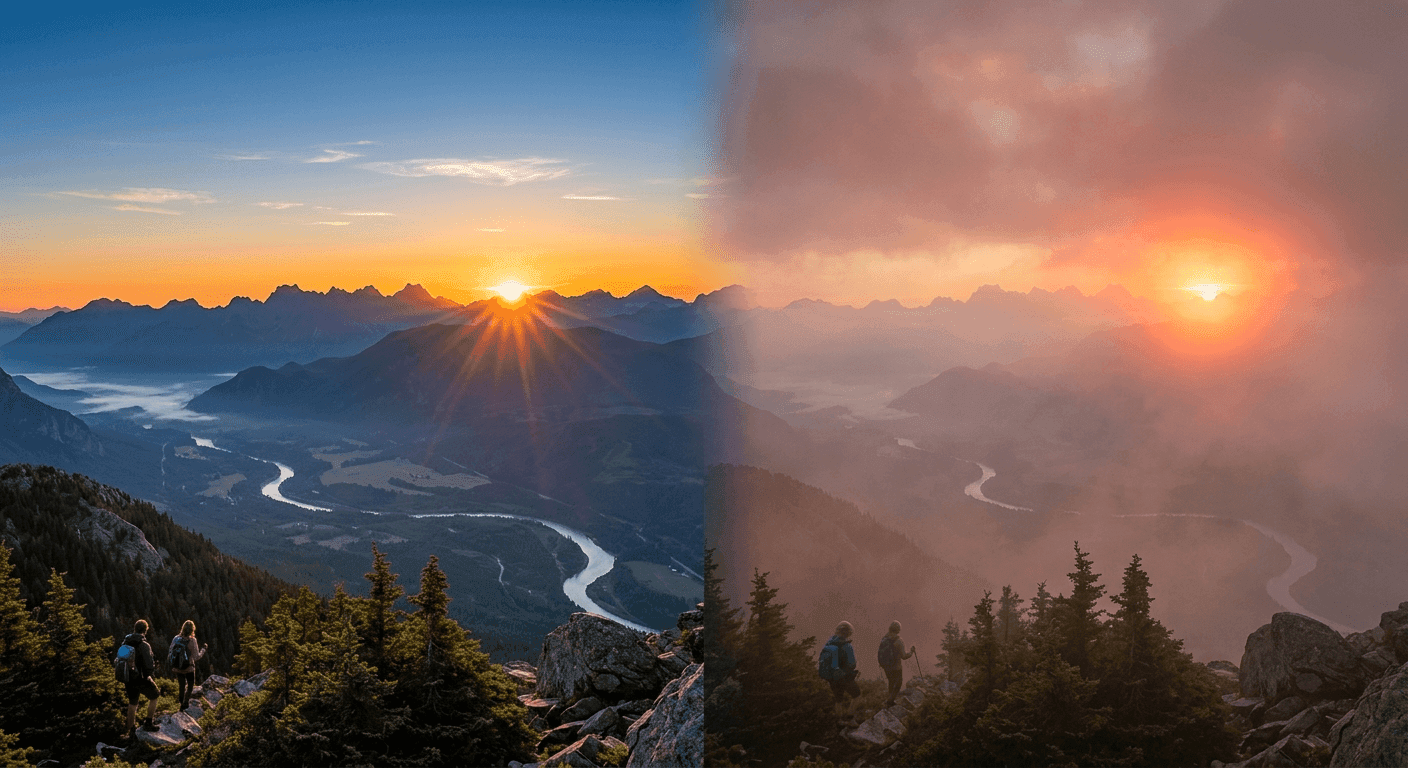
The role of humidity in determining the clarity of a sunrise view
The alarm rings, you step outside, and yesterday's golden glow has been swapped for a pale, washed-out sky. The culprit is often water hanging invi...
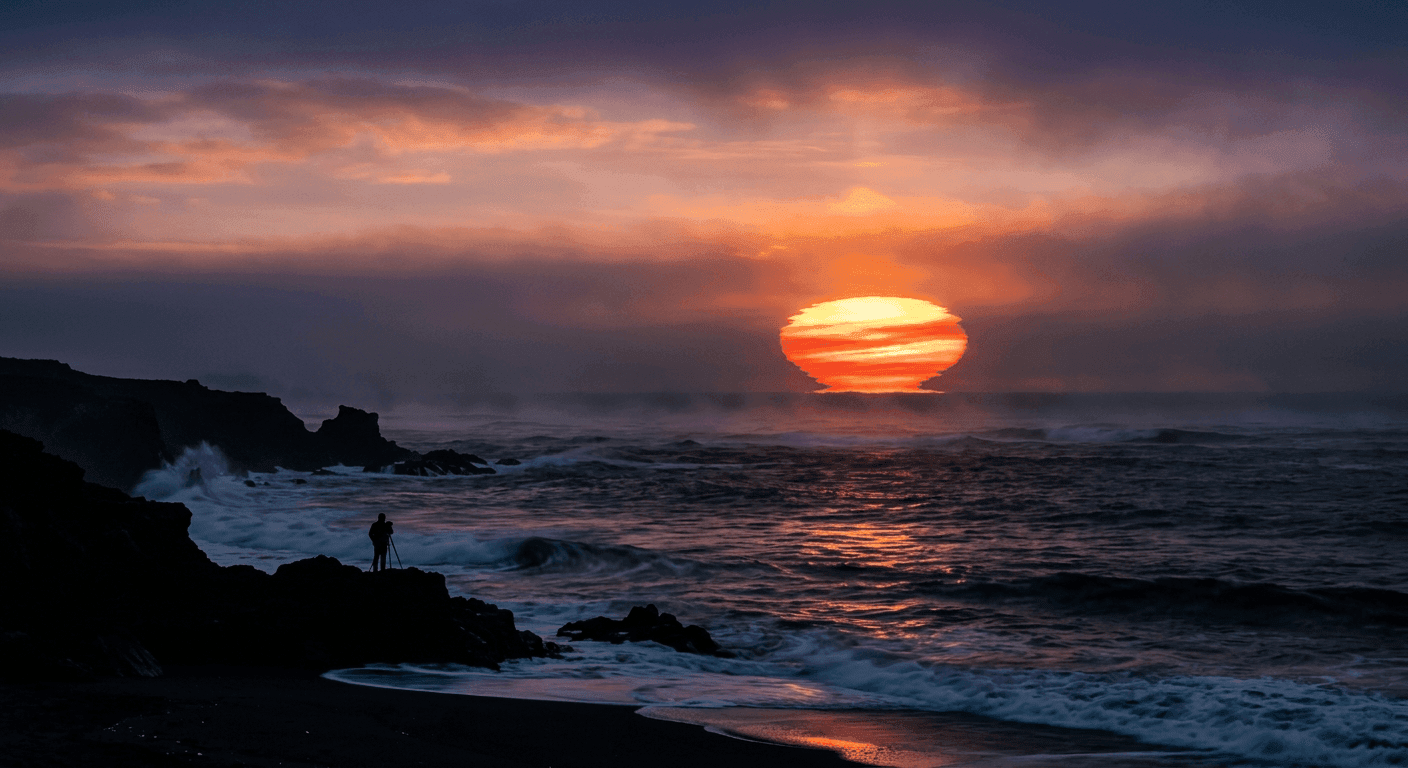
Why the sun appears to change shape at the moment of sunrise
Why the Sun Appears to Change Shape at the Moment of Sunrise <div style="background:#e0f7f0;border-left:6px solid #10b39f;padding:16px;margi...
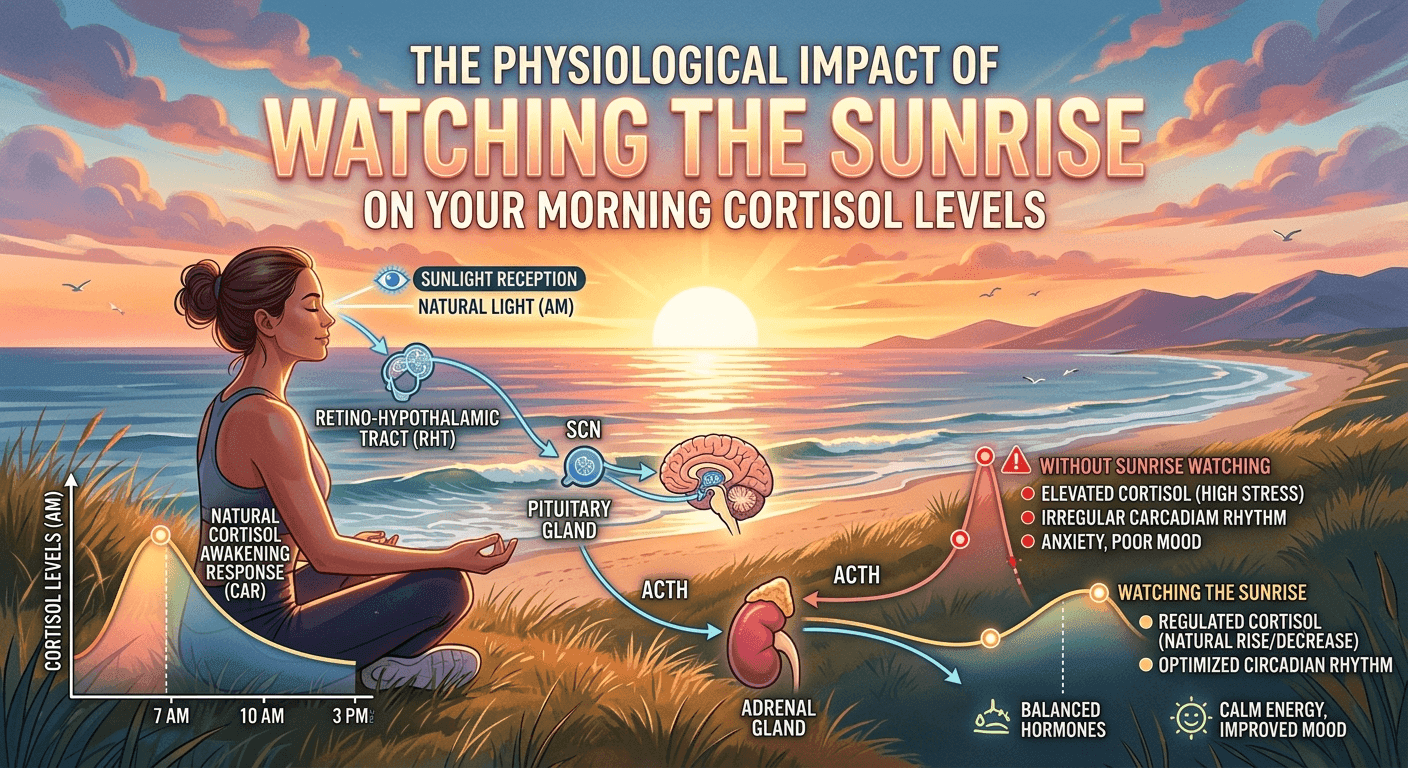
The physiological impact of watching the sunrise on your morning cortisol levels
Soft light slides across the horizon. Birds lift the volume. You breathe in cool air that still carries...
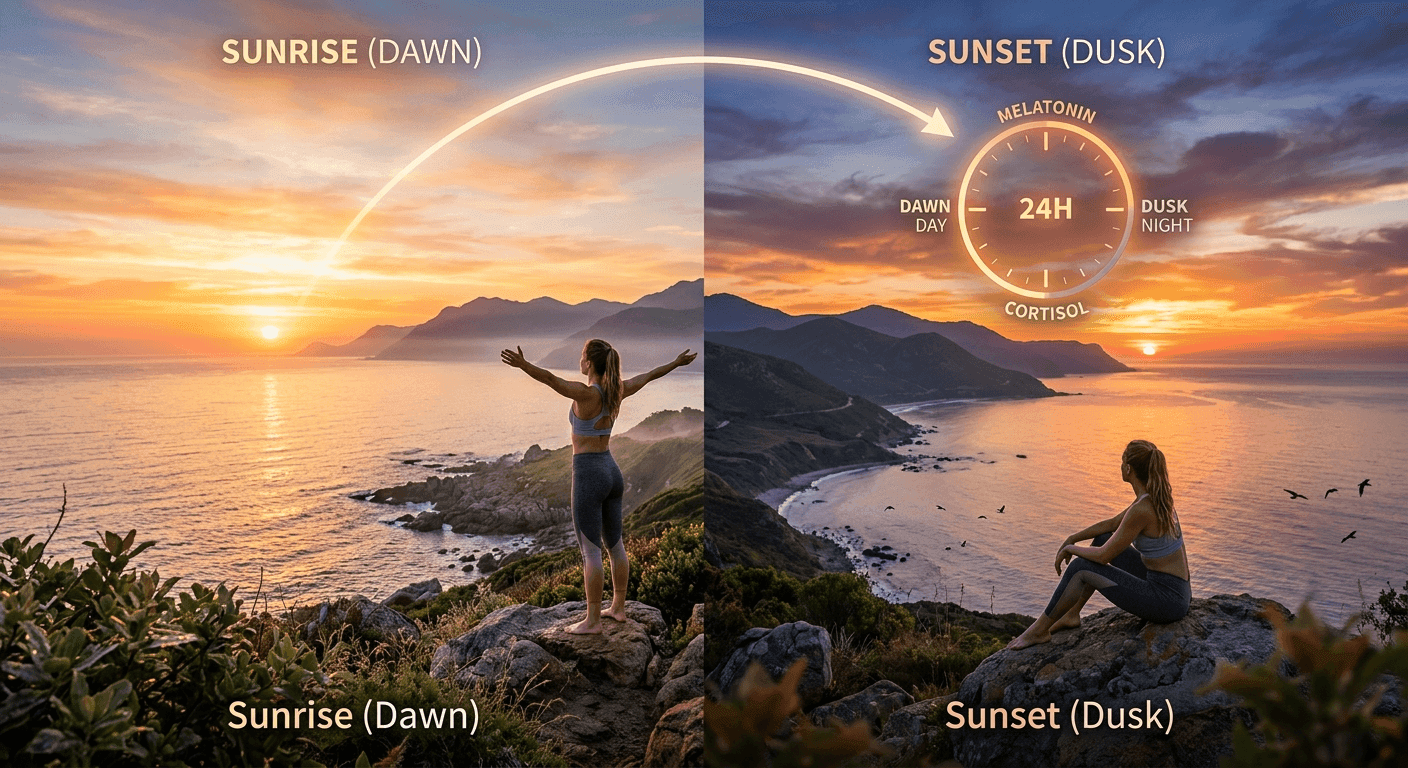
Why Human Circadian Rhythms Are Naturally Synced to Sunrise and Sunset
Sunlight is more than a backdrop for selfies or a cue to grab sunglasses. The daily rise and fall of the sun writes the schedule for nearly every c...
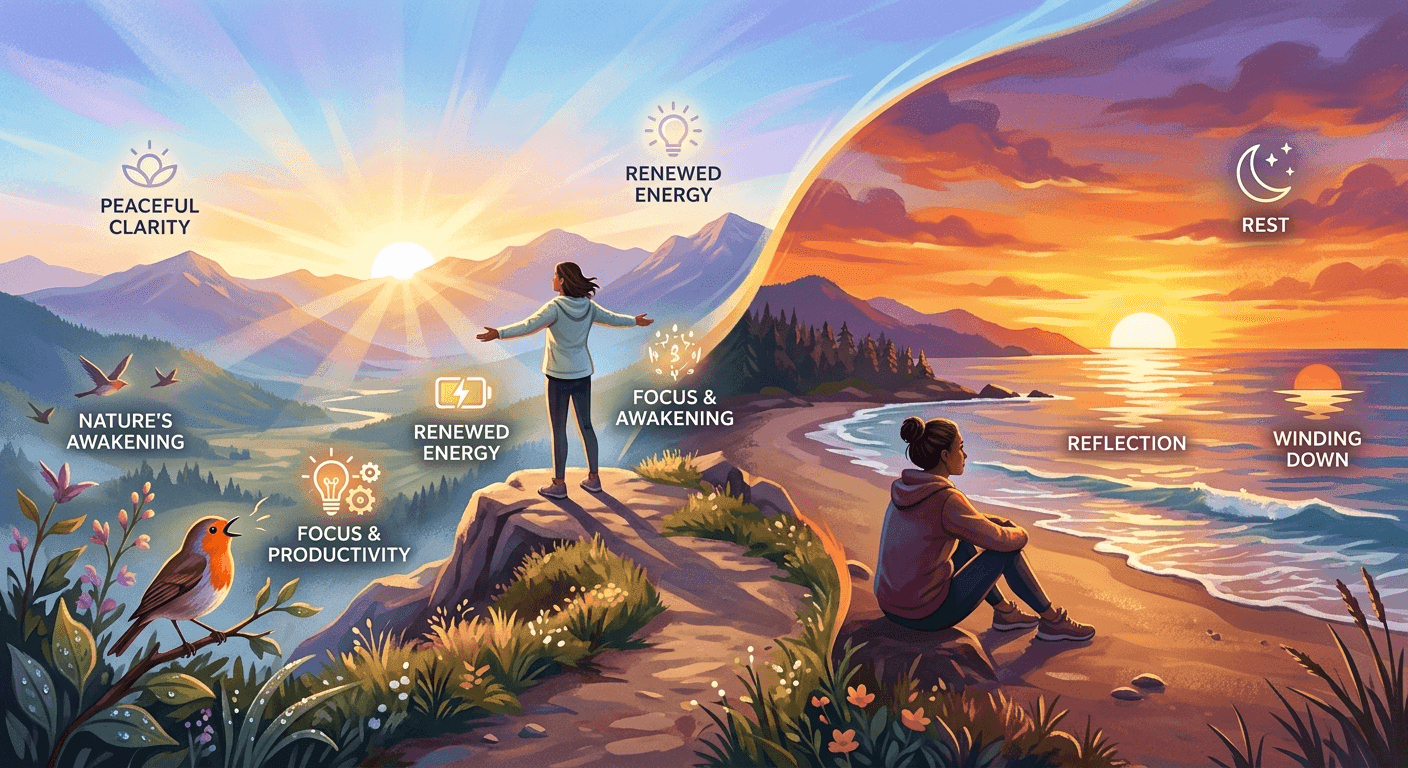
The hidden benefits of waking up early to witness a sunrise compared to sunset
The sky is still purple, birds are clearing their throats and the world feels on pause. Stand outside then, watch warm light tip over the horizon, ...
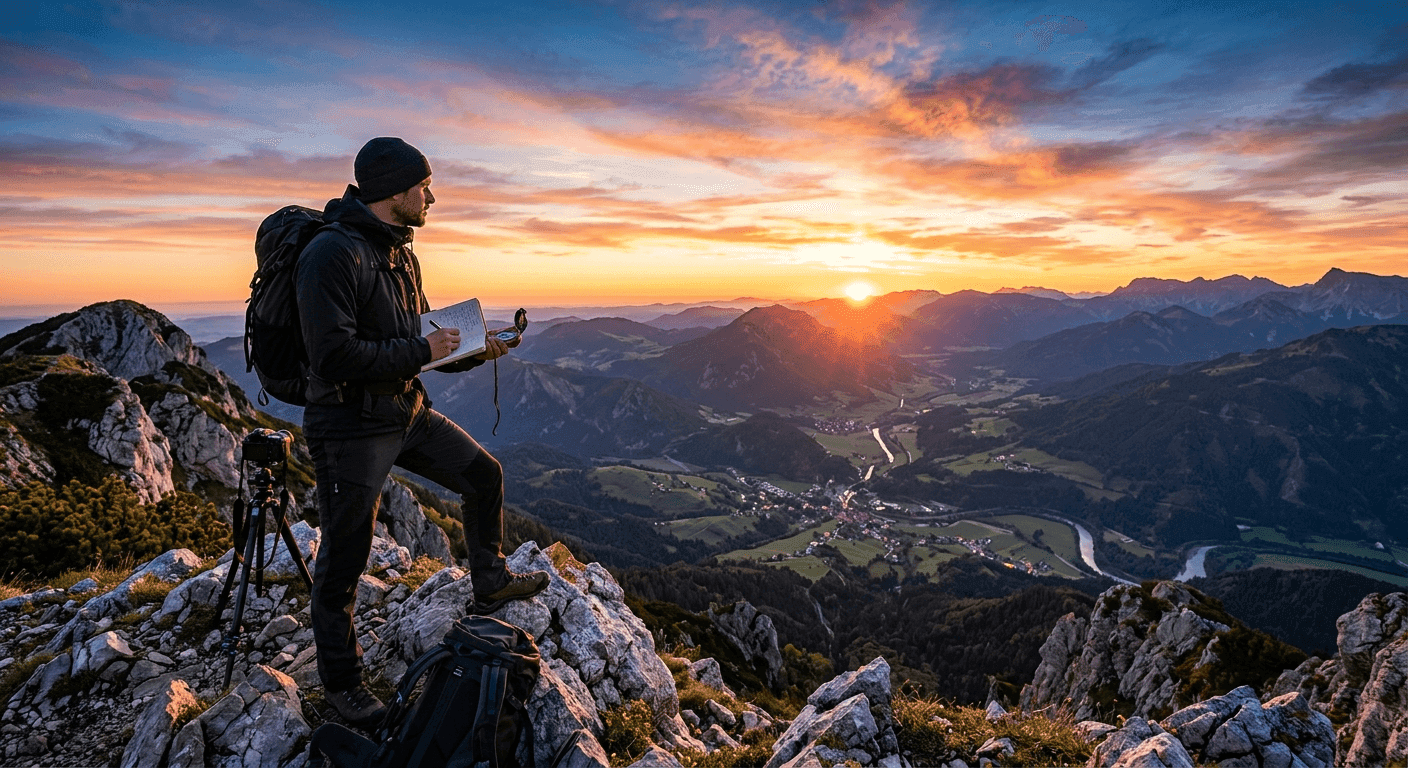
How to accurately calculate daily sunrise and sunset times for your region
<div style="display:flex;align-items:center;gap:12px;background:linear-gradient(135deg,#e6f5ea 0%, #d9f4ea 60%, #e6f5ea 100%);border-radius:12px;paddi...
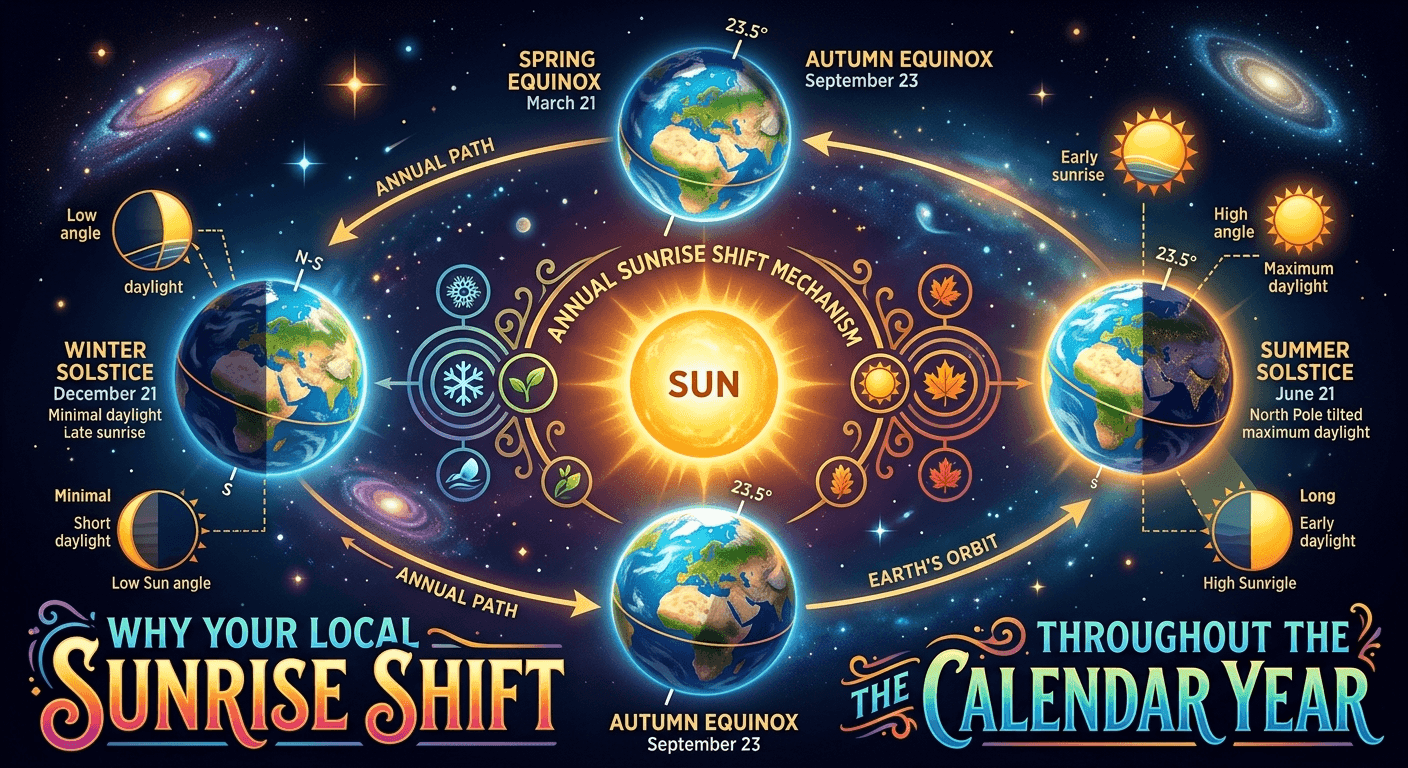
Why your local sunrise time shifts throughout the calendar year
Your local sunrise time moves with the calendar. It nudges y...
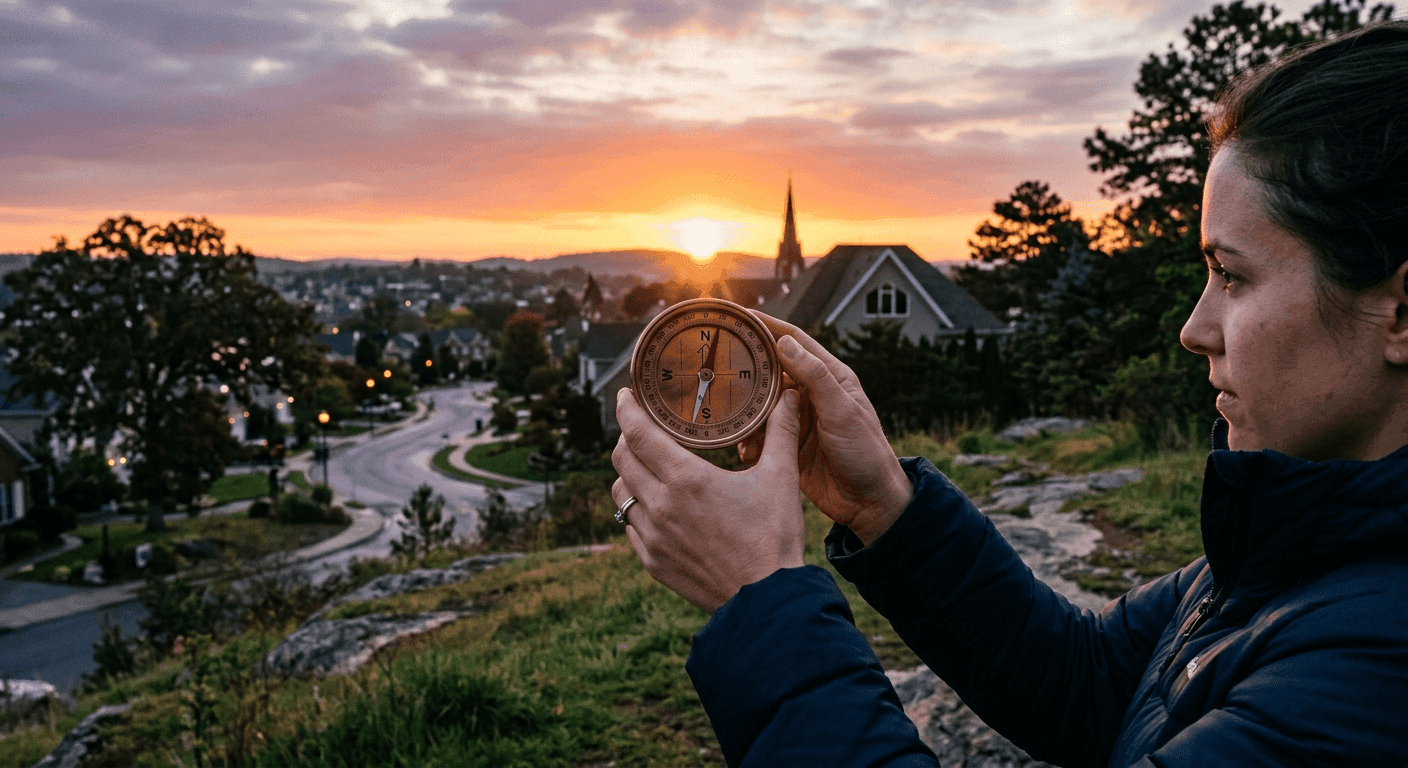
How to Use a Compass to Track the Exact Sunrise Position in Your Neighborhood
In many neighborhoods the sun follows a predictable arc, rising from a definite direction as the seasons roll by. A small tool you already own can ...

Practical ways to use sunrise and sunset data to improve garden plant growth
Sunrise and sunset times are more than clock dates. They are living signals that tune every garden task. When you know exactly when the...
Understanding how the Earth's orbit creates earlier sunrises in summer
<p style="font-size: 1.15e...